-
 VR Vitalis® Pro
A medical device designed to meet the needs of patients in healthcare facilities
VR Vitalis® Pro application
Certified medical device designed by top experts for patient rehabilitation
-
 More effective rehabilitation
The immersive effect of our application leads to the suppression of pain and unblocking of the patient's fears. This leads to faster improvement in their condition. Patients are more motivated to exercise. A unique connection with the inhalation of molecular hydrogens.
-
 Simple and safe operation
Intuitive application with simple controls. It is safe to use even for elderly or disabled patients. Ability to easily plan, evaluate exercises and analyze patient progress.
-
 Efficient operation
One physiotherapist can comfortably supervise multiple patients during exercise. Our application can replace some expensive rehabilitation devices. Thanks to more efficient rehabilitation, the turnover of patients is faster.
-

In Luhačovice Spa, a.s., in 2024, with the support of the RBP, we tested rehabilitation in virtual reality (hereinafter referred to as VR). This new technology pushes the boundaries of rehabilitation. Exercises in VR were prescribed by our doctors as part of rehabilitation plans for a number of patients with long-term movement and breathing diagnoses. Patients and physiotherapists alike have praised the exercises with the goggles and working with the app. The tolerance of the procedure - glasses and 3D environment was excellent, and we highly rate the user-friendliness of the environment. The wireless technology made handling easy and last but not least, we praise the excellent support of VR Vitalis®, who equipped us with hardware and software, trained us, serviced us and always responded quickly to our questions or comments. Based on our personal experience of the project, we are making efforts to get the virtual reality rehabilitation procedure reimbursed for routine operations.
 MUDr. Petr Pšenica Head doctor
 -

The use of virtual reality in our rehabilitation practice is another way to help patients regain lost functional ability, whether caused by injury, orthopedic surgery, or due to neurological or internal disease. We have been using virtual reality not only in the rehabilitation outpatient clinics at AGEL Třinec-Podlesí Hospital, but also at our detached workplaces in Bystřice and Jablunkov since 2022. We have established a successful cooperation with VR Vitalis® since 2023. Our patients who have used the individual modules in their upper limb and trunk treatment have been delighted with VR. These were mainly younger patients who are very close to the world of VR. The motivation of the game takes away the fear of movement and partially reduces pain, so we achieve better results in less time when we practice range of motion. We also find the use of VR in patients with asthma, where we apply the breathing module. We perceive virtual reality as an advanced method that has great application in our field, especially in practical use. We are very satisfied with our cooperation with VR Vitalis® and believe that the horizons of possibilities will continue to expand in line with the technical advances in the field of simulated reality.
MUDr. Barbora Ryšková Head of Rehabilitation Department -

In our facility at AGEL Prostějov Hospital, we started using virtual reality with VR Vitalis® on Meta Quest 2 goggles in 2023. At that time, we had VR from two other companies to test, and we chose VR Vitalis® because of the ease of use for therapists and the simple understanding of the activities offered to patients. We now use this therapy most often with inpatients at the Medical Rehabilitation Center for diagnoses such as CMP, craniotrauma, Parkinson's disease, post-operative upper extremity conditions (arthroscopy and total shoulder arthroplasty, etc.), and neurosurgical back surgery. Activities with ADL training for the upper limbs are very popular and can be used by patients in the home environment. We choose tasks that are bimanual while utilizing the potential of the whole body. They also stimulate the patient's cognition, require coordination of movement and full concentration on the task at hand. The most popular tasks are hanging laundry, chopping wood, putting cups on a shelf, watering flowers, catching butterflies or 3D painting. We have also newly included therapeutic modules for the lower limbs. We have already had several meetings with our colleagues from VR Vitalis® and look forward to further cooperation.
 Mgr. Veronika Horká physiotherapist at the Medical Rehabilitation Centre, AGEL Prostějov Hospital
 -

We are very grateful for the development of this device. While using it, we have seen our patients themselves strive for positive changes as it is very different from mechanical exercises. Overall, there have been no negative results.
Municipal enterprise "Kremenchuk Regional Clinical Hospital for War Veterans" Poltava Regional Council Mykola LYTVYNENKO Director
 -

I first encountered VR Vitalis® a year ago at a conference where I was able to try out virtual reality exercises for myself. It was clear from the first moment that it would be a useful tool in rehabilitation. The app is very nicely designed, has a simple layout, lots of different modules that we can tailor to the patient. We observed an increase in patients' motivation to rehabilitate when they got away from the normal exercise and hospital environment. I highly recommend it as an adjunct to conventional rehabilitation.
MUDr. Alice Najsrová Doctor of Neurology Clinic
Exercise modules
VR Vitalis Pro is a modular application providing rehabilitation in a variety of areas
-
 1Cognitive functions
Exercise for patients with cognitive deficits caused by illness, injury or surgery. Mostly in conjunction with upper limb training.
-
 2Upper limbs
Exercises suitable for large joints (shoulder and elbow) and wrist, including rotation.
-
 3Lower limbs
Exercise suitable for non-ambulatory patients or patients who have problems with walking or need to be in a vertical position.
-
 4Back and neck
Corrective exercises for poor posture or inappropriate movement patterns.
-
 5Meditation and relaxation
Modules to calm the patient and improve breathing capacity can be multiplied by inhaling molecular hydrogen.
-
 6Testing
Modules focused on movement, speech or cognitive analysis of the patient and its evaluation over
time. -
 7Fine motor skills
Exercises suitable for patients who need to practice the fine motor skills of the upper limbs.
-
 8Passive
Moduly v této kategorii jsou bez interakce, a slouží především pro psychický odpočinek nebo pro pacienty s demencí.
Cooperation with experts
VR Vitalis Pro is developed in close collaboration with leading experts
-
 Assoc. Prof. Michal Filip, MD, PhD, MBA University of Ostrava - head of the Centre for Artificial Intelligence, VR and Telemedicine, neurosurgeon at KNTB Zlín
Michal is an experienced neurosurgeon. He also has experience in spa care and has managed a regional hospital and a rehabilitation institute. He is now the head of the Center for Artificial Intelligence, VR and Telemedicine at OSU Faculty of Medicine and credits his experience as our medical expert.
-
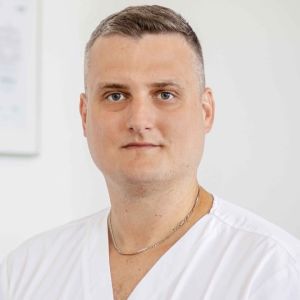 Assoc. Prof. Ondřej Volný, MD, PhD, FESO Deputy Head of Science and Research and Station Physician, Neurological Clinic, University Hospital Ostrava, Assistant Professor of Neurology at the Faculty of Medicine
Ondřej is a renowned neurologist and deputy head of science and research at the Neurological Clinic of the University Hospital in Ostrava. At the age of 35, he was awarded the title of associate professor of neurology. He has long been involved in the field of cerebrovascular accidents, actively participates in scientific projects and international cooperation, and is the author of numerous professional publications.
-
 Marcela Dabrowská, PhD, Occupational Therapist University of Ostrava - guarantor of Ergotherapy at the Faculty of Medicine, occupational therapist
Marcela is an experienced occupational therapist who also passes on her experience to students at the Faculty of Medicine at the OU. She is very helpful in setting up the product, testing it and conducting expert studies.
-
 Šárka Baníková, MD University hospital Ostrava - head of Rehabilitation and Physical Medicine department, rehabilitation doctor
Šárka is a rehabilitation physician and head of the Clinic of Rehabilitation and Physical Medicine at the Ostrava University Hospital. She leads a team of physiotherapists who design and test exercise modules for us.
-
 Štefan Reguli, MD, PhD University hospital Ostrava - neurosurgeon and head of the LERCO project
Štefan is a neurosurgeon and also leads the LERCO project at FNO, which aims to link basic research, applied research and commercialization of scientific outputs. He is our main expert on the awake surgery application.
-
 Prof. Roman Jašek, PhD, DBA Director of the Institute of Informatics and Artificial Intelligence at Tomas Bata University in Zlín
Roman is the director of the Institute of Informatics and Artificial Intelligence at Tomas Bata University in Zlín and a great expert in new technologies.
-
 Marie Kaniová, PhD University hospital Ostrava - clinical speech therapist
Marie is a clinical speech and language therapist with a lot of experience. In the project she helps us especially with the module for recognition and testing of speech disorders, for example in awake operations.
-
 Renáta Čecháčková, MA University hospital Ostrava - physiotherapist
Renáta is a physiotherapist who works at the Department of Rehabilitation and Physical Medicine at the Ostrava University Hospital with experience in both outpatient and inpatient settings. Together with others from the department, she co-developed the designs and descriptions of exercises within the project and participated in the correction of the modules in VR, their use and verification in practice, especially in patients in the subacute stage with overlap to the outpatient component.
-
 Irena Skřinařová, BSc University hospital Ostrava - physiotherapist
Irena also works as a physiotherapist at the Clinic of Rehabilitation and Physical Medicine of the Ostrava University Hospital. She has used her experience from outpatient and inpatient practice together with others from the department within the project in designing, describing exercises and correcting new modules in VR. She further integrates these into the therapy of patients and finds out their effect. She is particularly involved in the design and validation of modules in the acute phase of rehabilitation.
-
 Kristýna Müllerová, MA University hospital Ostrava - physiotherapist
Kristýna is another experienced physiotherapist from the Clinic of Rehabilitation and Physical Medicine at the Ostrava University Hospital with experience in outpatient and inpatient services. In the project team, she collaborated on the design, exercise descriptions and modifications of the developed modules in VR. Kristýna is mainly involved in the testing of patients undergoing rehabilitation exercises in the VR environment.
-
 Jana Štveráková, MD Hospital AGEL Ostrava-Vítkovice - head of Medical rehabilitation department, rehabilitation doctor
Jana is a rehabilitation doctor and head of the Medical rehabilitation department. She leads a team of physiotherapists and occupational therapists who together with us design and test exercise modules for patients.
-
 Michaela Plandorová, MA Hospital AGEL Ostrava-Vítkovice - occupational therapist
Michaela is an occupational therapist in the Medical rehabilitation department. She is devoted to the exercise of patients in virtual reality. She helps us design and verify the effectiveness of rehabilitation modules.
-
 Aneta Svobodová, MA physiotherapist
Aneta started working with us already during her studies. She now works as a physiotherapist in a Brno hospital. She helps us mainly with instructing clients, processing documents for studies, etc. She has a great gift of patience even in physiotherapy work with children.
Contact us
Are you interested in our application? Do you have any questions about it? We will be happy to answer them, please contact us.