Pulmonary Rehabilitation at Ostrava University Hospital ICU: Virtual Reality in Patients Following Severe Trauma
In Ostrava on 1st of February 2024
What is neuroplasticity?
The ability of the nervous system to respond to external and internal stimulations and to change its activity based on these changes. By responding to these stimuli it is meant to reorganize its structure of individual centers and their functional interconnections. Physiologically, these plastic changes can be observed during the actual development of the nervous system, during trauma, during the process of sensorimotor learning, and normally during the aging process of life. Due to neuroplasticity, humans have the ability to learn, to evaluate internal and external stimuli based on previous experiences. It can be concluded that neuroplasticity plays a major role in the actual development and physiological functioning of the nervous system.
There are many types of neuroplasticity. In rehabilitation we are most interested in adaptive and reparative plasticity.
What is motor learning
A specific process that takes place continuously. It involves a large number of motor skills. These are the result of the integration and regulation of events that take place at multiple levels. Motor learning along with subsequent motor expression is influenced by many factors. These factors must be of sufficient quality for the learning of a new motor skill or the reorganization of a motor program to occur. Virtual RHB facilitates the motor learning process by increasing the motor intensity and increasing the number of repetitions of each movement.
Patient 1
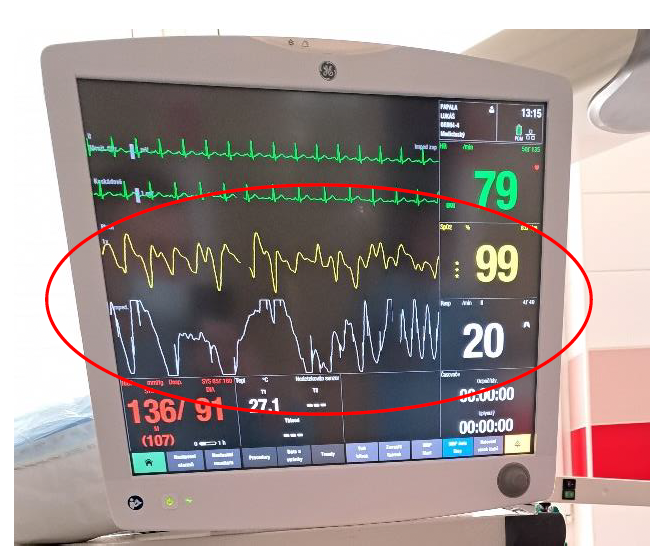
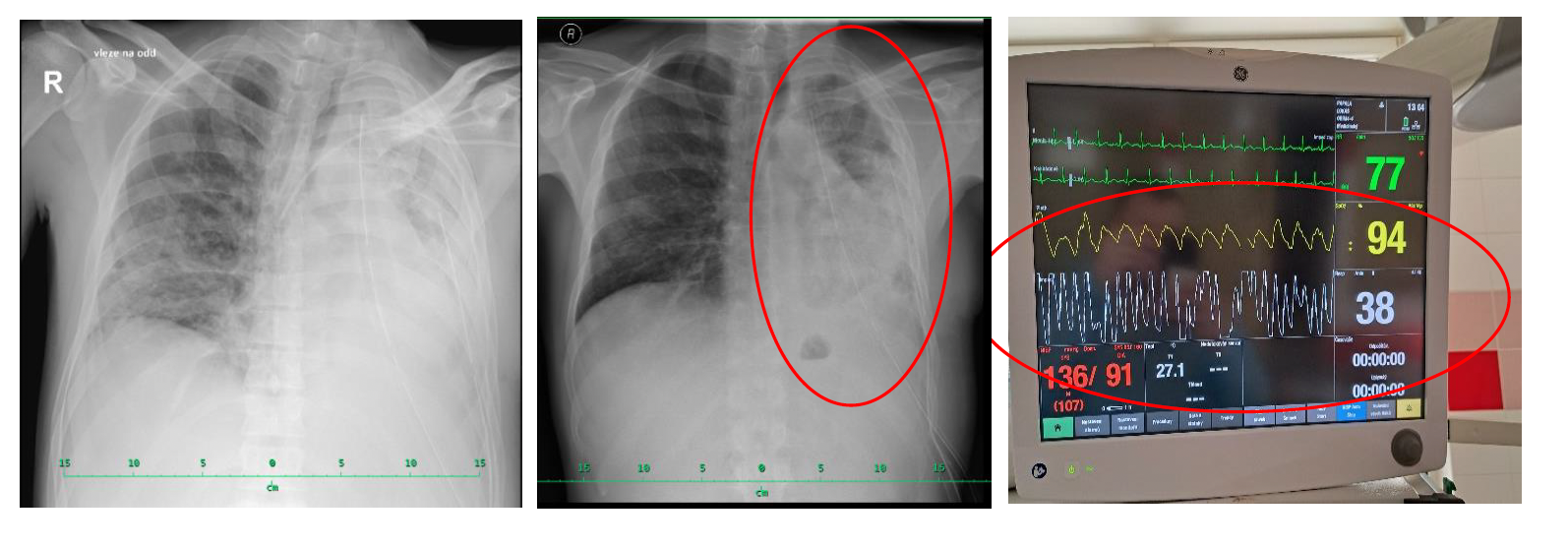
Patient after lung decortication. In the picture we can see especially the increase in saturation (SpO2) and improvement in respiratory rate.
The first X-ray shows that the left lung is collapsed and hardly ventilating. On the next image, which was taken 5 days after the first one, we can see that the upper apex of the left lung is already ventilating. Also the left lower compartment is already somewhat developed..
Patient 2
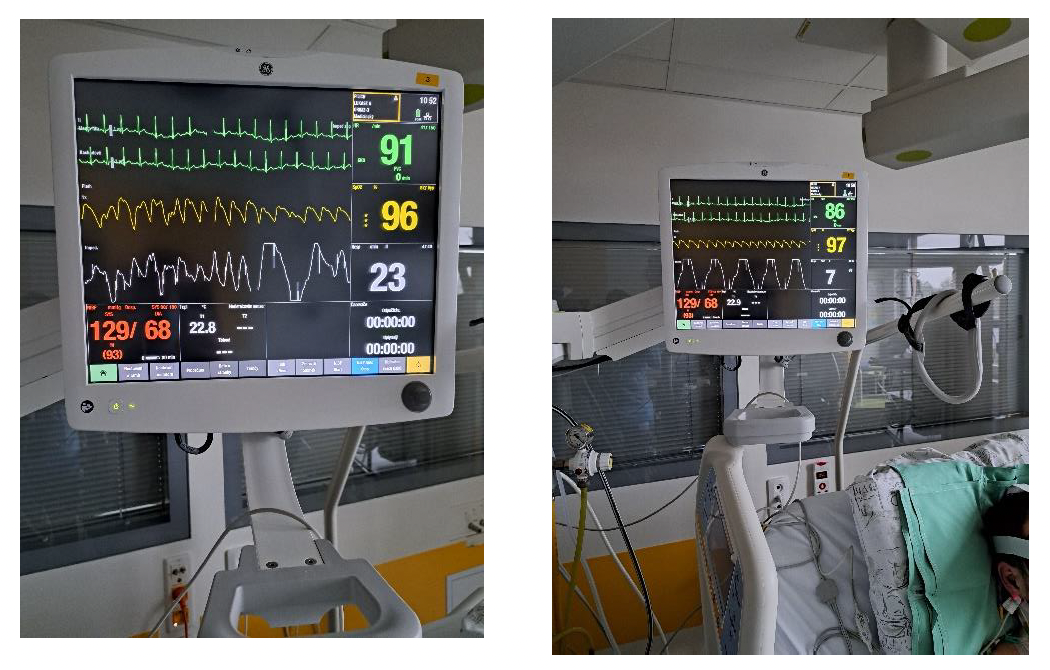
Patient after being stuck in the mine. Patient could not be sedated before application. He was breathing at high frequencies and irregularly.
After the application, the VR intuitively ventilates beautifully according to the selected parameters.
Author
Mgr. Filip Hromádka
Fakultní nemocnice Ostrava, ARO
The website https://vrvitalis.cz/ (the "Website") and case studies may contain copyrighted works, trademarks, databases and other goods protected by law. Visitors to the Website may not copy any content of the Website and case studies or use the content of the Website and case studies for commercial or non-commercial purposes without the prior consent of VR LIFE s.r.o.
Visitors may not scrape or otherwise extract data from the Site and Case Studies for any purpose, including automated text or data analysis (e.g., for AI training), without VR LIFE s.r.o.'s prior consent.
Case reports on the use of VR Vitalis Pro in patients with FNO