St. Elizabeth Hospital: Virtual Reality Helps Cancer Patients Achieve Independence and Improved Mobility
Clinical findings from 30 oncology patients at St. Elizabeth Hospital show that VR Vitalis® in occupational therapy significantly improves hand motor function, self-reliance, and motivation.
Clinical Experience with VR Vitalis® at St. Elizabeth’s Hospital in Slup and the Faculty of Biomedical Engineering, Czech Technical University in Prague
St. Elizabeth’s Hospital: Virtual Reality Helps Cancer Patients Achieve Independence and Improved Mobility
Quick Summary
Over the course of a 12-month period, 30 hospitalized patients were enrolled in the program at St. Elizabeth’s Hospital in Slup. Virtual reality exercises were conducted as part of comprehensive occupational therapy, typically for about 30 minutes a day, 5 times a week. In a follow-up clinical evaluation, the study group showed favorable changes in upper limb mobility, grip strength, and participation in activities of daily living. VR also served as a motivational and interactive form of training.
Challenges During Long-Term Hospitalization
The study group consisted of patients with various oncological diagnoses, particularly breast and prostate cancers; some patients had undergone neurosurgical procedures. The average length of hospitalization in the study group was approximately three months. During this time, it is important to encourage patients’ active participation in rehabilitation, practice of activities of daily living (ADL), and restoration of arm and hand function.
Conventional rehabilitation exercises can be physically and mentally demanding for some patients after surgery or during cancer treatment. The Vitalis® VR system complements occupational therapy with interactive, structured training that provides immediate feedback. The difficulty and scope of the exercises can be adapted to the patient’s current condition and exercise tolerance.
How was the therapy conducted, and which modules were used?
The therapy was conducted as part of comprehensive occupational therapy care for approximately 30 minutes a day, 5 times a week. The therapist selected the modules individually based on the patient’s condition and the goals of the therapy:
Cups: Focused on reach, coordination, and shoulder stability.
2D and 3D Painting: Practice of range of motion, fluidity, and fine motor skills.
Tower: Training in precision of movement, targeted grasping, and coordination.
Sorting: Development of visual-motor skills, differentiated movement, and cognition.
Flowers: Repetitive, targeted movements to build endurance.
Chopping: Training in movement dynamics, muscle strength, and reaction time.
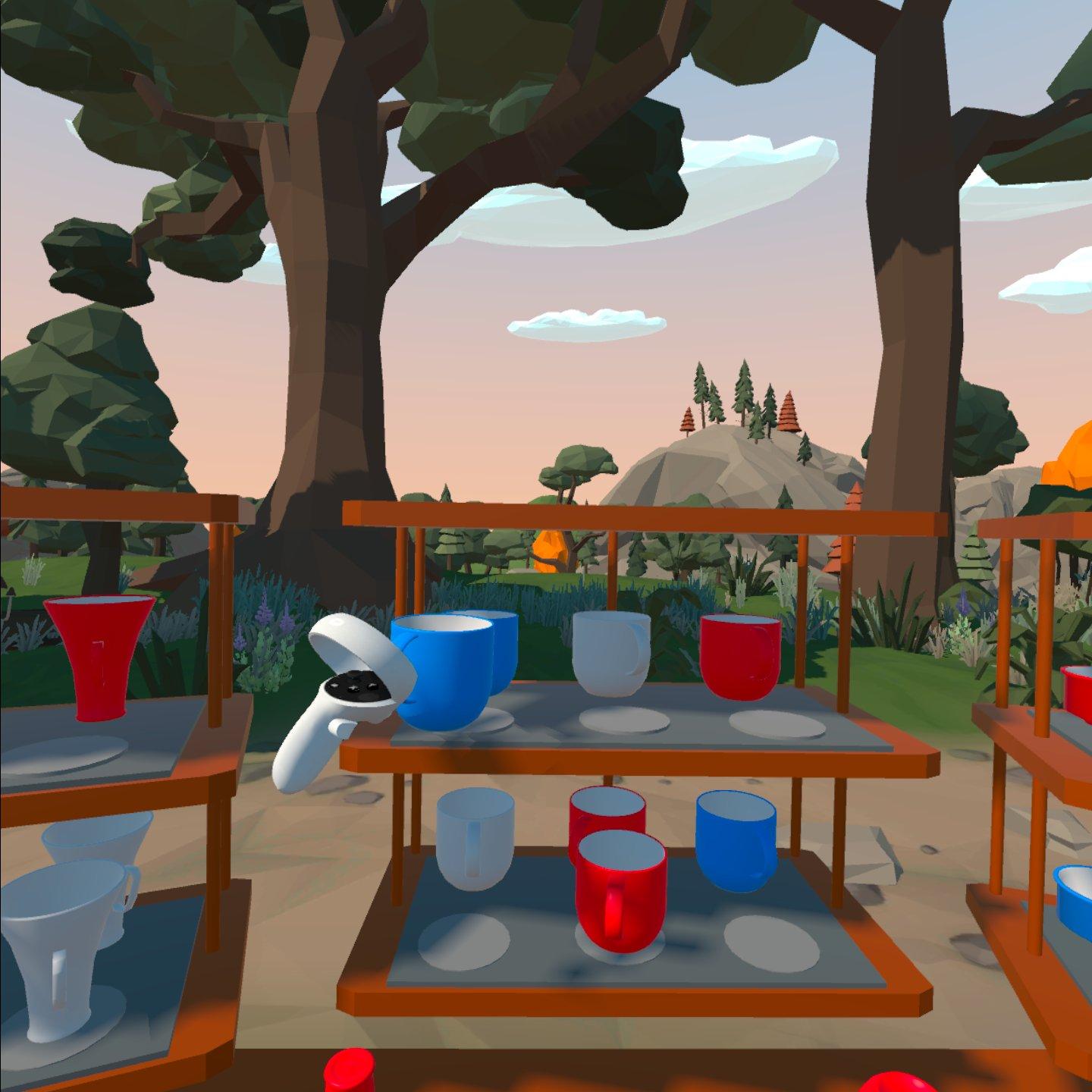
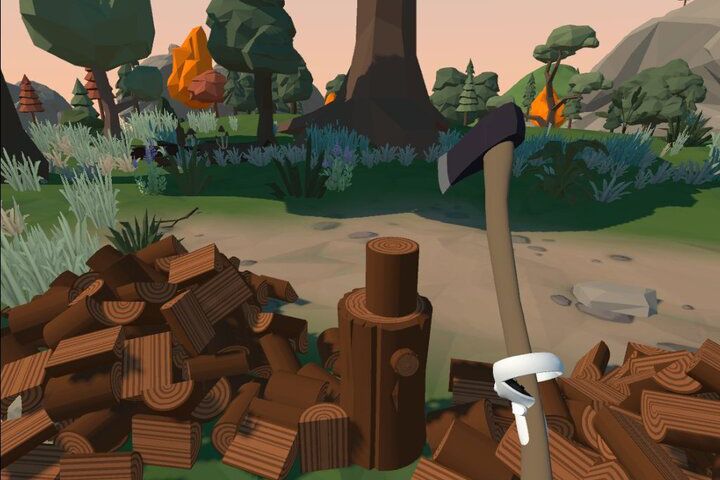
Repeated occupational therapy assessments included goniometry, dynamometric measurement of grip strength, evaluation of independence in ADLs, and, as clinically indicated, cognitive screening using the MMSE. The following changes were described in the study population:
Observed Changes and Clinical Experience
Improved upper limb motor function: There was a measurable increase in active range of motion in the shoulder, elbow, and wrist, as well as greater precision in targeted movements.
Increased grip strength and more secure grip: Dynamometer measurements confirmed improved grip quality, eye-hand coordination, and more active engagement of the weakened limb.
Greater independence in ADLs: Patients began to use their upper limb more effectively during daily activities on the ward.
Motivation for therapy: Patients perceived VR as a very welcome change during long-term hospitalization, which broke the monotony and encouraged a willingness to cooperate.
“The incorporation of VR Vitalis® into occupational therapy for hospitalized oncology patients represents a suitable complement to conventional occupational therapy, particularly during long-term hospitalization, where it can boost motivation and enable repeated practice of functional tasks.” – Ing. David Tesařík, St. Elizabeth’s Hospital in Slup and the Faculty of Biomedical Engineering, Czech Technical University in Prague
The use of this case study is not permitted without the consent of the author and VR LIFE s.r.o.
The website https://vrvitalis.cz/ (hereinafter referred to as the "Website") and case studies may contain copyrighted works, trademarks, databases, and other legally protected assets. Visitors to the Website may not copy any content from the Website or case studies, nor use content from the Website or case studies for commercial or non-commercial purposes without the prior consent of VR LIFE s.r.o.
Visitors may not scrape or otherwise extract data from the Website or case studies for any purpose, including automated text or data mining (e.g., for AI training), without the prior consent of VR LIFE s.r.o.
Download the full document