From a Paralyzed Arm to Chainsaws and Via Ferratas: How VR Helped After a Severe Brachial Plexus Injury
Study shows VR Vitalis® occupational therapy relieved severe neuropathic pain, restored arm function, and helped a 55-year-old man return to swimming and cycling 5 years after a brachial plexus injury
Case Study: VR Vitalis® Pro
Mgr. Marcela Dabrowská, Ph.D.
From a Paralyzed Arm to Chainsaws and Via Ferratas: How VR Helped After a Severe Brachial Plexus Injury
Ostrava, April 9, 2026
Executive Summary
A 55-year-old man suffered a severe brachial plexus injury (brachial plexus paresis) following an accident. This resulted in a loss of mobility, severe muscle atrophy, and unbearable neuropathic pain. Thanks to his perseverance and the integration of the VR Vitalis® virtual reality system into his occupational therapy plan, key shoulder muscles were objectively activated, ultimately restoring a full and active life to the patient.
Baseline Condition: Injury, Orthosis, and Severe Pain
In April 2020, a 55-year-old male patient suffered an injury that resulted in compression of the brachial plexus on his right side. The arm was largely non-functional, requiring the patient to wear a specialized brace (orthosis) while enduring severe neuropathic pain.
The personal goals established by the patient at the beginning of rehabilitation initially seemed almost unattainable:
- Relieve the unbearable pain.
- Independently bathe, dress, and prepare meals.
- Propose a toast with family at Christmas.
- Walk more than 3 km, swim again, and return to the mountains.
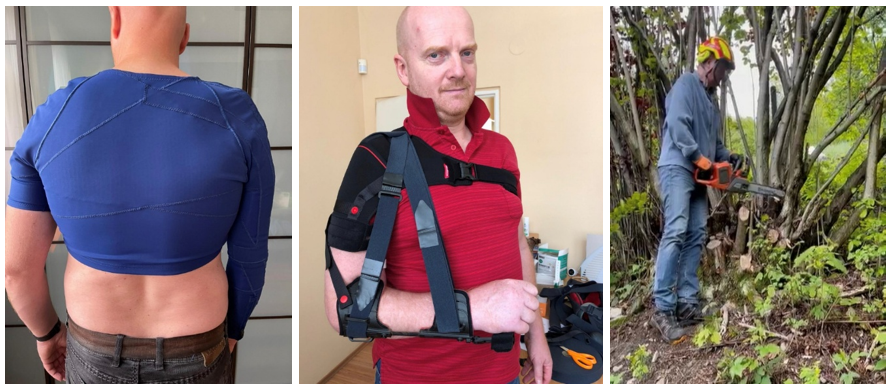
Therapy with VR Vitalis®: From 3 Minutes to Two-Handed Tasks
In February 2023, occupational therapist Marcela Dabrowská, Ph.D. added exercises with the VR Vitalis® system to the comprehensive treatment plan.
Rehabilitation in virtual reality followed a clear progression:
- The beginning (February 2023): The patient could exercise for 3 to 5 minutes at most. He performed simple one-handed tasks (2D and 3D tracing, free painting in VR).
- Progress in therapy (May 2023): The patient gradually moved on to two-handed tasks - in the virtual world he hung out laundry, assembled jigsaw puzzles and handled mugs.
- Self-directed therapy at home: Three months of self-directed therapy in the home environment followed, extending his tolerance for VR exercise to as much as 18 minutes.
Regular exercise in a controlled immersive environment stimulated the neuroplasticity of the brain, provided immediate feedback and gave the patient enormous motivation to push beyond his own limits.
Video here.
Measurable Data and Remarkable Human Results
Both clinical measurements and the patient’s own perception confirmed a major breakthrough:
- Resolution of neuropathic pain: The debilitating neuropathic pain gradually subsided.
- Objective muscle activity (EMG): Surface electromyography confirmed a marked increase in the activation of the key muscles of the shoulder and arm (m. biceps brachii, m. infraspinatus and m. deltoideus) with no unwanted compensatory patterns.
- A step change in quality of life (WHODAS 2.0): The overall level of disability in the quality-of-life questionnaire fell from an initial 50.5% to just 10.6%.
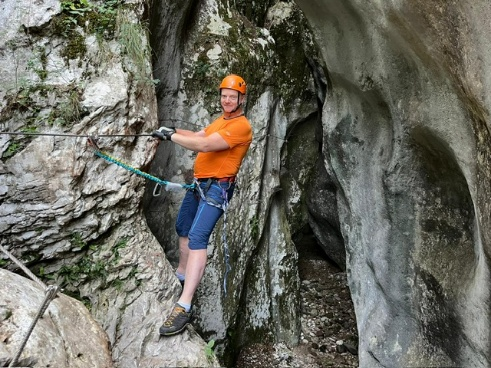
In the patient’s own words:
"I am not yet able to climb a demanding via ferrata or play tennis, but I can swim a full 1 km in 32 minutes doing breaststroke, walk 20 km, work with a chainsaw, chop wood and cook. After 5 years I got back on a bike and overcame my fear of falling! The neuropathic pain has stopped and my arm is far more dependable."

--------------------------------------------------------------------------------------------------------------------------------
This case study may not be used without the consent of the author and of VR LIFE s.r.o.
The website https://vrvitalis.cz/ (hereinafter the “Website”) and the case studies may contain copyrighted works, trademarks, databases and other assets protected by law. Visitors to the Website may not copy any content of the Website or of the case studies, nor use the content of the Website or of the case studies for commercial or non-commercial purposes without the prior consent of VR LIFE s.r.o.
Without the prior consent of VR LIFE s.r.o., visitors may not scrape or otherwise extract data from the Website or the case studies for any purpose whatsoever, including automated analysis of text or data (e.g. for AI training).