ICU at Ostrava University Hospital: Virtual Reality in the Care of Patients with Acute Respiratory Distress Syndrome (ARDS)
In Ostrava on 21 February 2024
ARDS (acute respiratory distress syndrome)
Acute respiratory distress syndrome (ARDS) is an acute form of lung disease. ARDS is the result of an inappropriate inflammatory reaction in the lung tissue, which can be triggered by infectious or non-infectious agents. During this reaction, damage to the pulmonary alveoli, accumulation of fluid in the lungs, and prolongation of the diffusion pathway of oxygen occur. ARDS most commonly occurs as a consequence of aspiration of gastric contents, severe trauma, pulmonary infection, drowning, and is a clinical manifestation of shock lung.
Patient 1
Patient after ARDS (acute respiratory failure). Here I attach the VR rehabilitation evaluation according to the patient herself.
"Hello,
I've been asked for feedback on virtual reality. I am very happy to remember it. The visible change that surprised me was in the movement of my right upper limb, which I couldn't even lift the first days, and on the last day I could already lift my arm without help, making connections, doing puzzles. What helped me further was the breathing exercise. It helped me to breathe properly and to relax, to unwind. Overall, I find 3D reality very beneficial. It always took me out of the hospital environment and was able to relax me."

Patient 2
Patient after rupture of the diaphragm, together with oppression of the entire left lung by organs that entered the chest space. The pictures show a beautiful reduction in respiratory rate and the correct breathing curve we would imagine.

Patient 3
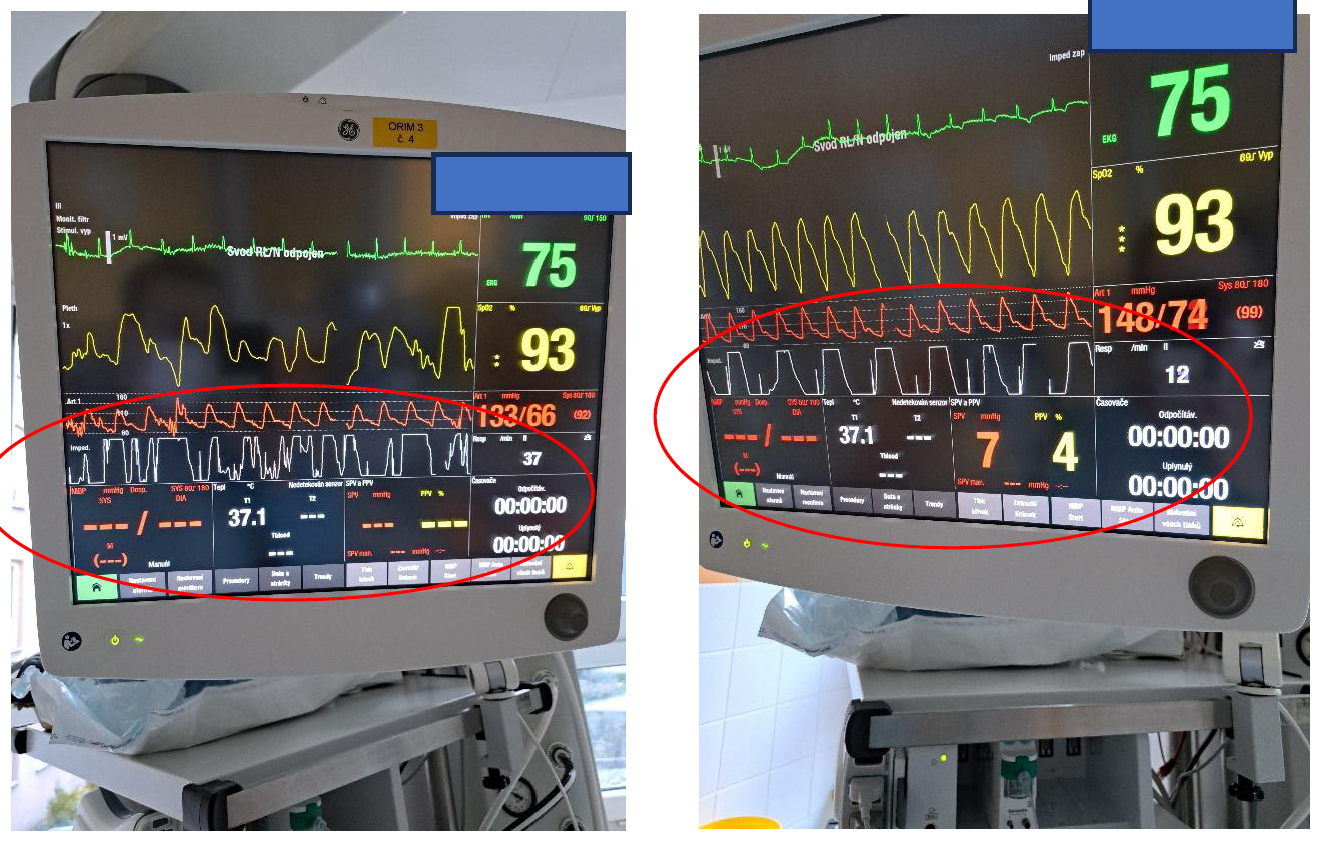
ARDS + awake VV ECMO. In this patient, too, the images show a decrease in respiratory rate and improvement in breathing mechanics. From 37 breaths per minute to 12
Patient 4
Patient after decortication of the right lung. Here is a saturation increase during respiratory rehabilitation in VR.

Author
Mgr. Filip Hromádka
Fakultní nemocnice Ostrava, ARO
The website https://vrvitalis.cz/ (the "Website") and case studies may contain copyrighted works, trademarks, databases and other goods protected by law. Visitors to the Website may not copy any content of the Website and case studies or use the content of the Website and case studies for commercial or non-commercial purposes without the prior consent of VR LIFE s.r.o.
Visitors may not scrape or otherwise extract data from the Site and Case Studies for any purpose, including automated text or data analysis (e.g., for AI training), without VR LIFE s.r.o.'s prior consent.
FNO ARO II case report for download